
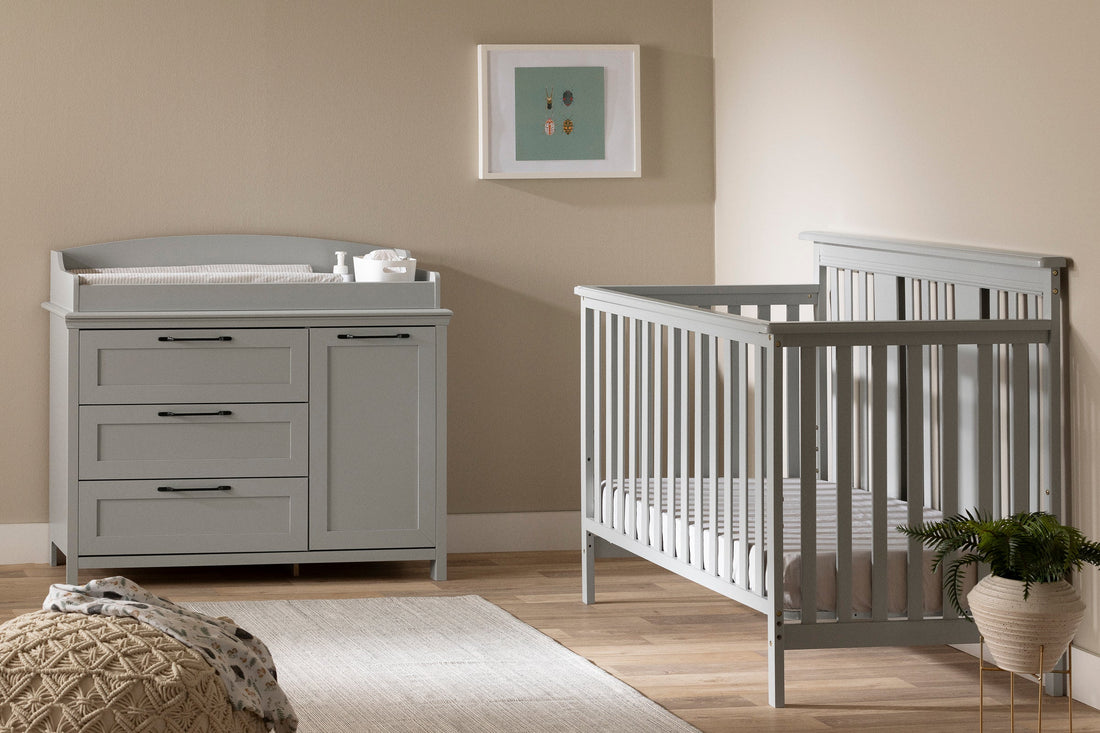
Safe Baby Furniture: ASTM Standards, Testing, and Tips
Megan DeslongchampsShare
How to Ensure Your Baby Furniture is Safe?
As a parent or soon-to-be parent, nothing is more crucial than the safety of your child. Babies spend a lot of their time in their rooms sleeping and playing, making it essential to ensure this environment is as safe as possible. And that starts with choosing the right furniture.
To help you make the best choices for your family, here are three key criteria to consider ensuring the safety of baby room furniture.
1. Check for ASTM Compliance
Ensuring your baby's safety begins with selecting furniture that meets the standards set by the American Society for Testing and Materials (ASTM).
These standards are vital as they govern many crucial aspects of children's furniture, from robust design to safe and non-toxic materials. They are designed to prevent any risk of injury and ensure that the products used in your child's room are both reliable and safe.
Take, for example, the specific ASTM F1169-19 standard for cribs: this rigorous guideline ensures that the crib slats are spaced closely enough to prevent babies from sticking their heads through and getting stuck. It also addresses other aspects such as bed stability, to avoid any risk of tipping over, and material strength, to ensure that the bed can support a baby's weight and movements without sagging.
When choosing furniture for your child's room, it is therefore imperative to check for the ASTM logo on the labels. This logo isn't just a symbol; it represents assurance that the product has undergone rigorous testing and meets high safety standards.
At South Shore Furniture, we ensure all our products are up to date with the latest ASTM standards to give you peace of mind.
2. Opt for Furniture Tested Against Tipping
With frequent reports of accidents caused by furniture tipping over, it has become imperative that any furniture intended for a child's room be tested for stability.
These tests, known as anti-tip or tip-over tests, involve simulating the weight of a child in drawers or on shelves to ensure the furniture does not tip over. For dressers and changing tables, the ASTM F2057 standard is often used as a reference to guarantee their stability.
At South Shore Furniture, we have implemented rigorous testing, validated by Underwriters Laboratories (UL), to ensure that all our furniture is safe for use in children's rooms.
Install the Anti-tip Device
Each piece of furniture intended for storing clothing must include an anchoring kit. This device must be securely attached to the wall to prevent any risk of tipping, especially if the child tries to climb the furniture.
To increase safety, it is also advisable to:
- Distribute weight evenly by placing heavier items in the lower drawers.
- Avoid placing heavy or attractive objects like toys on top of furniture, which could tempt your child to climb.
- Ensure the child does not climb on the furniture and teach them the associated risks.
- Never leave drawers open, as they can serve as a step for a curious child.
3. Choose Furniture with Additional Safety Features
Safety standards and stability tests are good safety indicators, but there are other measures to consider.
For changing tables, opt for those with edges and restraints to keep the baby in place. Also, ensure that all materials used, including paints and finishes, are non-toxic and safe, as babies like to explore with their mouths.
For cribs, ensure they allow easy and safe height adjustment. Choose models with ventilated sides to improve air circulation and prevent overheating and suffocation risks.
4. The Importance of Adaptable Children's Furniture
Choosing furniture that can adapt as your child grows is not only economical but also positively impacts the environment by reducing the amount of waste generated from frequent furniture replacements.
Opt for items like convertible beds that evolve from baby cribs to junior beds, or a changing table that transforms into a dresser.
These wise choices not only keep up with your child's development but also ensure long-term use of each piece of furniture under safe conditions.
Baby Furniture Safety: Measures That Protect You
By integrating additional safety features such as interlocking devices that prevent opening several drawers simultaneously and adding weight to the back of furniture to increase stability, we aim to offer products that always combine style and safety.
In summary, purchasing furniture for your baby's room should be guided by a rigor in safety. By choosing furniture that complies with ASTM standards, tested for stability, and equipped with practical safety devices, you ensure a safe environment for your child to grow. Your little one's safety is our priority at South Shore Furniture, and we are dedicated to providing the best for your family's comfort and protection.